
Τυφῶν | Typhoeus The betrayal of the ear
The pandemic from Covid 19 has brought to light a now undeniable conflict between the conception of humans as masters, colonizers, of the entire universe-which has marked Western culture for more than two millennia at least-and the principle of existence of Nature per se whose lawfulness prescinds from human presence, but of which humans are part among other species and among other kingdoms, living and nonliving.
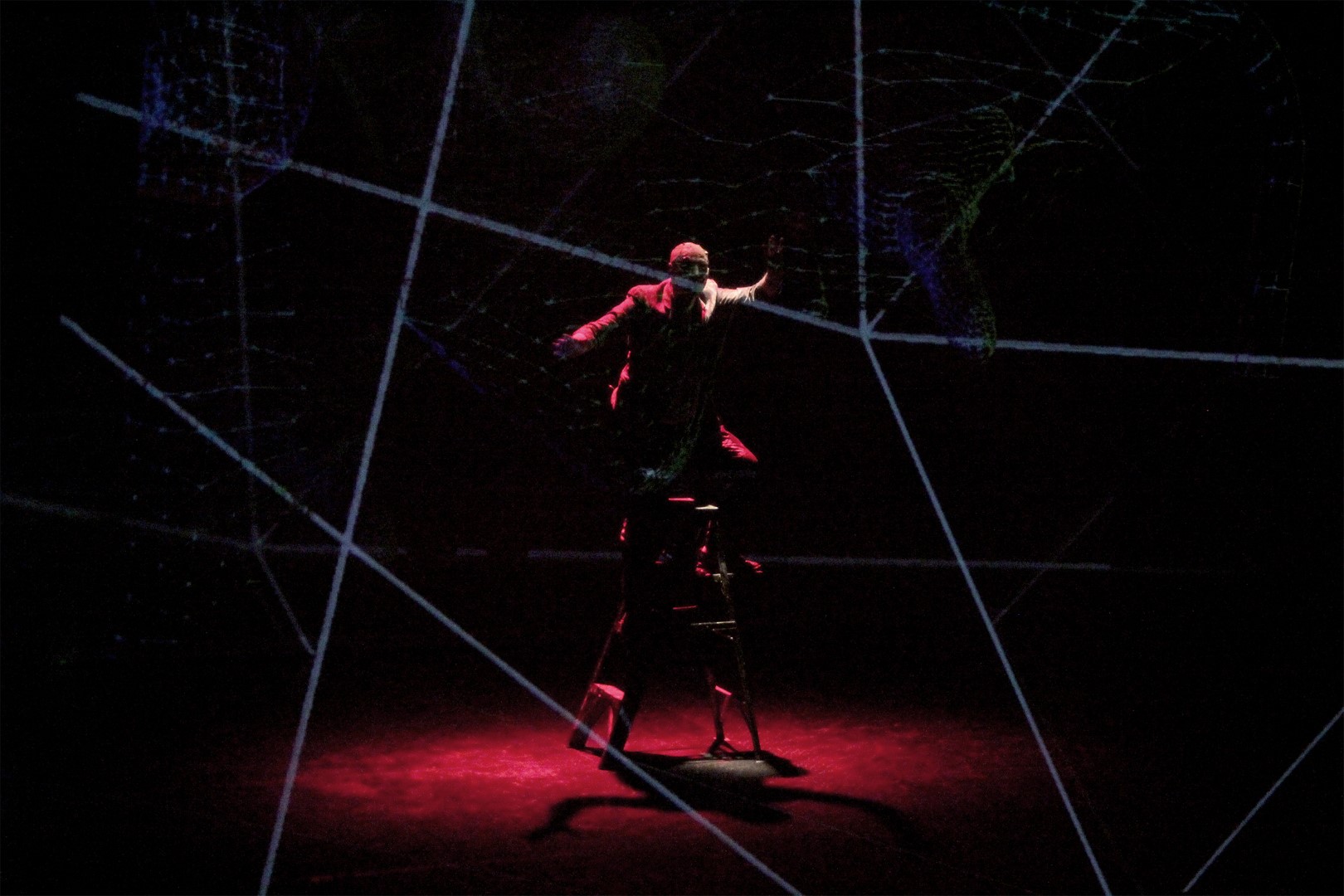
Retablo's performance stages a large virtual prison - translucent, technological and interactive - inside which is locked up Typhoeus, the monster with a hundred heads of ferocious beasts, with two hundred arms and two hundred legs made of tangled snakes that Zeus - in the mythological version - buried alive under Sicily, with his head crushed under the volcano. Repugnant, shapeless, telluric, Typhoeus is the symbol of an uncontrollable nature, hostile to man and civilization, to be corrected as erroneous, to be repaired, improved, fixed, healed. An outcast, cloaked under the reassuring superficial glittering crust of modernity and progress, the terrifying monster is treated, by the very rational Dr. Cadmus, as a psychiatric case, held outside the perceptual field of collective consciousness. Yet, though annihilated it continues to terrorize us. It returns like a regurgitation sowing chaos and terror and relentlessly destroying every human project.
Nature vs. civilization, body vs. machine, the human being is the outcome of this radicalization of extremes that come to touch. The augmented, polyphonic perception, the interaction between the human and digital elements, the externalization of senses through out-of-body devices, but less and less distinguishable from biological ones, create a new monstrosity. Like Typhoeus, the man of the technological age is imprisoned, detached from his own body, estranged from himself, but with the need to take possession of the same by asserting his own freedom/animality: the theater is the place where this happens.
 ENG
ENG  ITA
ITA